Drive Riverdale Road on a Saturday afternoon and the corridor tells you exactly what it wants you to think it is: a six-lane retail strip stacked with car dealerships, big box anchors, and a restaurant row that keeps adding names. Ken Garff, Larry H. Miller, Tony Divino Toyota, and Wasatch Front Kia sit within a mile of each other, giving shoppers access to vehicles from more than ten manufacturers off a single freeway exit. It reads like a place built entirely for people passing through.
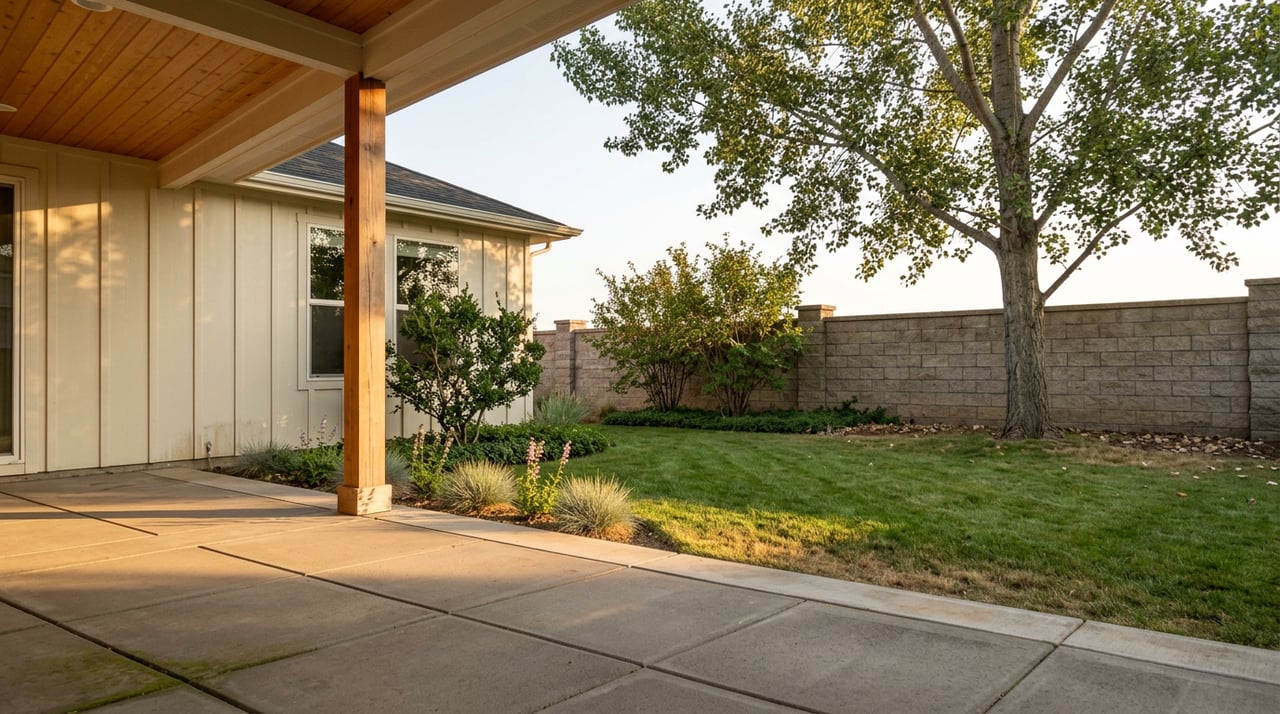
Turn off that road onto almost any side street, though, and the corridor disappears fast. The traffic noise thins out, the lots give way to modest homes, and within a few blocks you're at the edge of the Weber River. That split is the actual story of Riverdale. It is a city built at two different scales at once, one sized for the tens of thousands of people who drive through it every day, and one sized for the roughly 9,500 who live there. This is a look at the second city, the one that doesn't show up in traffic reports.
Nine Thousand People, Sixty Thousand Cars
Riverdale's own numbers make the split explicit. The city's residential population sits around 9,500, but its daytime population, workers and shoppers included, swells to roughly 60,000 because of the businesses lining Riverdale Road. That's not a rounding difference. It's a city where, on any given weekday, the daytime population is more than six times the number of people who live there.
Riverdale's mayor has leaned into that identity rather than fought it. When Trader Joe's confirmed it was coming to town, he pointed to the corridor's position near both I-15 and I-84, and to traffic counts on Riverdale Road running around 60,000 cars a day, as the reason the deal made sense. Recent commercial listings along the same stretch put average daily traffic closer to 55,000 vehicles as of early 2026, which tracks with a corridor built for volume rather than for the people who sleep a few blocks off it.
That framing matters because almost everything written about Riverdale treats it as an economic engine first. The residential experience gets mentioned almost as an afterthought, if at all. What follows is the part that usually gets skipped.
The Trail That Disappears the Road
A few hundred yards off Riverdale Road, the Weber River Parkway Trail runs three paved miles through the city, tracing the river from its north end to its south. It connects north into the Ogden River Parkway, giving residents a continuous ten-mile paved route from the south end of Riverdale to the mouth of Ogden Canyon. There are three trailheads inside city limits:
- South of the Civic Center, off 600 West
- The north end of the trail, off Parker Drive
- A short fisherman's access path near 1050 West and River Park Drive, leading down to the riverbank
The city's own trail page notes the path has gotten popular enough that dog leash violations and speeding cyclists have become a recurring enforcement issue, which is a strange kind of proof of concept. A trail nobody used wouldn't need policing.
Past the Civic Center, tucked behind the city office building, sits Riverpark Disc Golf Course, 27 holes threaded through open meadow, cottonwoods, and river frontage. It's free to play and has been built out in stages since it opened as a 13-hole course in 2005, expanding to 18 holes the following year and to its current 27-hole layout in 2010, when the original homemade baskets were finally replaced. It's the kind of amenity that never makes a headline but gets used every weekend by people who live within walking distance of it.
Riverdale Park and the Splash Pad
Riverdale Park offers a view of city amenities beyond the retail corridor. The park sits at 4300 South Parker Drive and carries two large pavilions, three small pavilions, two playgrounds, sand volleyball, a ball diamond, tennis courts, and a half-mile walking path. Medium and large pavilions can be reserved online between May 1 and September 30, while the smaller ones are first come, first served.
The park's splash pad normally runs daily from Memorial Day through Labor Day. This year, after Weber Basin Water notified the city of a 20 percent restriction on its water supply tied to drought conditions, Riverdale adjusted the schedule and started closing the splash pad on Thursdays to cut water use, with hours holding steady the rest of the week.
It's a small change, and it won't show up in any market report. It is one example of how everyday life in Riverdale includes local amenities and resource constraints beyond the retail corridor.
Trader Joe's Comes to Riverdale
As KSL reported, Trader Joe's opened on October 24, 2025, at 4060 S. Riverdale Road, the site of a former Shopko, next door to an Ashley Furniture outlet. It was Utah's first Trader Joe's north of Salt Lake County, and the grand opening drew a crowd that wrapped around the building before doors opened at 9 a.m., with a marching band playing while shoppers filed in.
Riverdale's community development director described why the city wanted it. New Trader Joe's locations reportedly boost traffic at nearby businesses by 10 to 15 percent when they first open, and he framed the store's arrival mainly in those terms, calling it one more reason for people to come to Riverdale. One shopper at the opening, quoted by KSL, called the new store "my new Disneyland."
Both framings are true, and they're aimed at two different audiences. For people driving Riverdale Road, Trader Joe's is a draw, a reason to exit the freeway. For the 9,500 who actually live there, it's simpler than that. It's the difference between driving to Ogden or Layton for specific groceries and picking them up on the way home from work in the city where you already live.
The Restaurant Row Off the Road
Riverdale Road's restaurant lineup has grown enough that a local business reporter for The Standard-Examiner once described the corridor's pace of new openings as "abnormal," and while that growth has slowed somewhat since, the strip keeps adding names. What's notable for residents isn't the fast-casual chains that dominate national franchise maps of the area. It's the sit-down spots that have become regular stops:
- Table Twenty Five
- Weller's Bistro
- Napoli's Italian Restaurant
- The Angry Goat Pub & Kitchen
- Slackwater Pub & Pizzeria
- Cheddar's Scratch Kitchen
Add Super Chix and Shake Shack, the latter opening at 4142 S. Riverdale Road at the start of 2024, and you get a corridor that mixes drive-thru volume with places people actually sit down in on a Friday night. That mix, national chains for the daytime crowd and sit-down spots for the people staying home, is its own version of the same split running through everything else in this city.
Two Cities, One Address
None of this shows up if you only measure Riverdale by its traffic counts or its retail additions. The trail that vanishes into cottonwoods a few hundred yards from dealership lighting, the disc golf course built out in stages since 2005, a splash pad trimmed back one day a week to manage a real water restriction, and a grocery store covered in headlines as an economic engine but treated, day to day, as a regular stop on the way home. That's what living in Riverdale actually looks like, distinct from what driving through it looks like.
If you're weighing what it means to live somewhere built for both scales at once, or wondering how a corridor like this holds its value while it keeps adding retail, Justin Scott and the Great Scott Real Estate Team know this stretch of Weber County block by block. Let's Connect.